The Shape of Absence
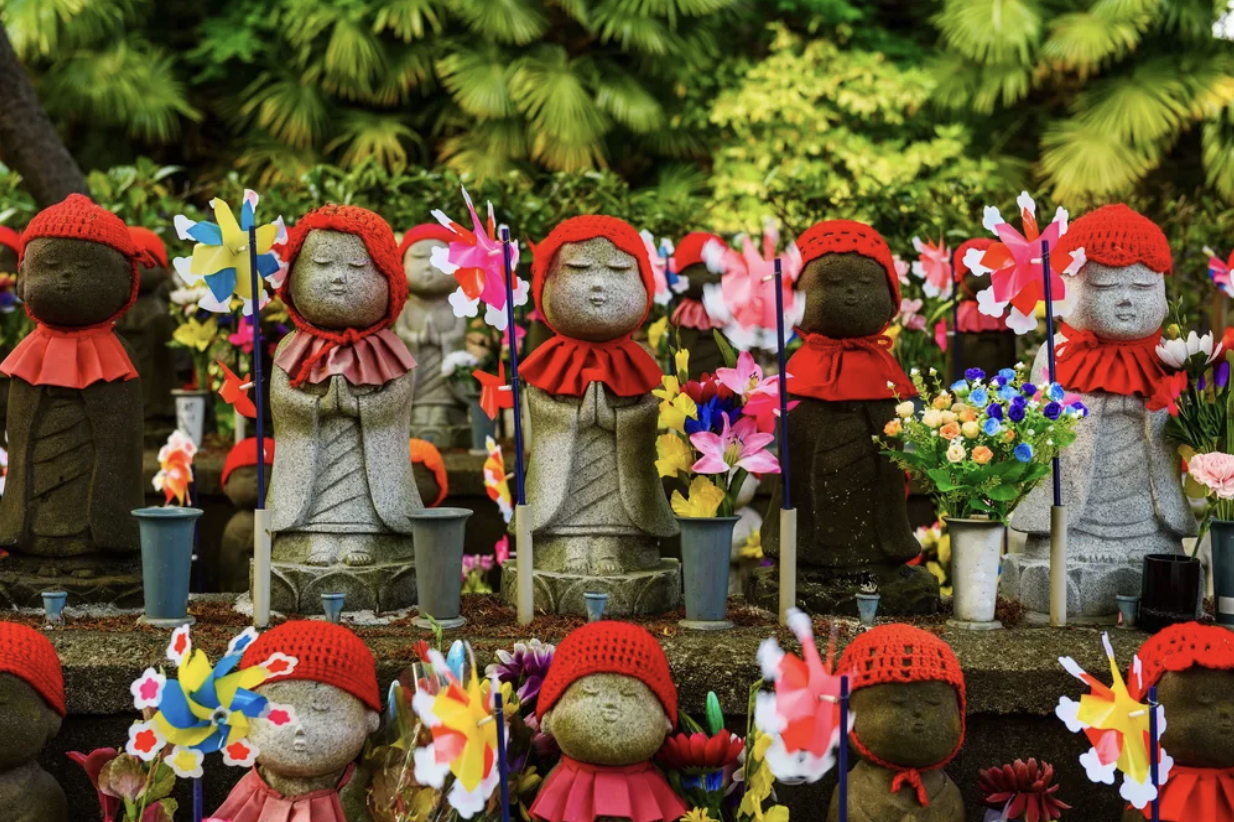
Standing beside the Tokyo Tower, one of Tokyo’s great odes to modernity, is the Zojo-ji Temple, a Jōdo-shū Buddhist temple in the city’s Minato ward. To the right of its nearly 700-year-old main hall are rows upon rows of small statues lining the temple grounds. They are thoughtfully adorned and carefully dressed, often in red, a color known to ward off evil. These figures are Jizō, bodhisattvas who have chosen to remain on earth as guides and protectors of children, particularly the Mizuko: the “water children” who were never born. Miscarried, aborted, stillborn, or otherwise lost before arriving to the world in living form, Mizuko exist in a perpetual liminal space. The statues of Zojo-ji Temple serve as embodied offerings to these waylaid souls.
How do we give form to absence? Ritual has long offered humans (and nonhumans!) a container to hold grief — to give space, shape and sustained attention to the formless energies that swirl within and between us. The Mizuko Kuyō ritual invites mourners to channel loss and heartache into being through acts of care and devotion. In a world where grief is often stowed away, the Mizuko Jizō serve as public witnesses to sorrow. They remind us that while grief can isolate, it can also connect.
The First Noble Truth of Buddhism teaches that suffering is not an aberration, but an essential condition of life itself. Carefully carrying the Mizuko across worlds in their cloaks and robes, the Mizuko Jizō guide mourners through an embodied encounter with dukkha (the noble truth of suffering). In tending to these statues, mourners ritualize their grief and enter into a shared field where parent and child’s suffering are held together. Through honoring what cannot be held, the bereaved enact a profound paradox: bringing sorrow into being, making visible that which — and those who — were never fully here.