Awakening from Outer Space
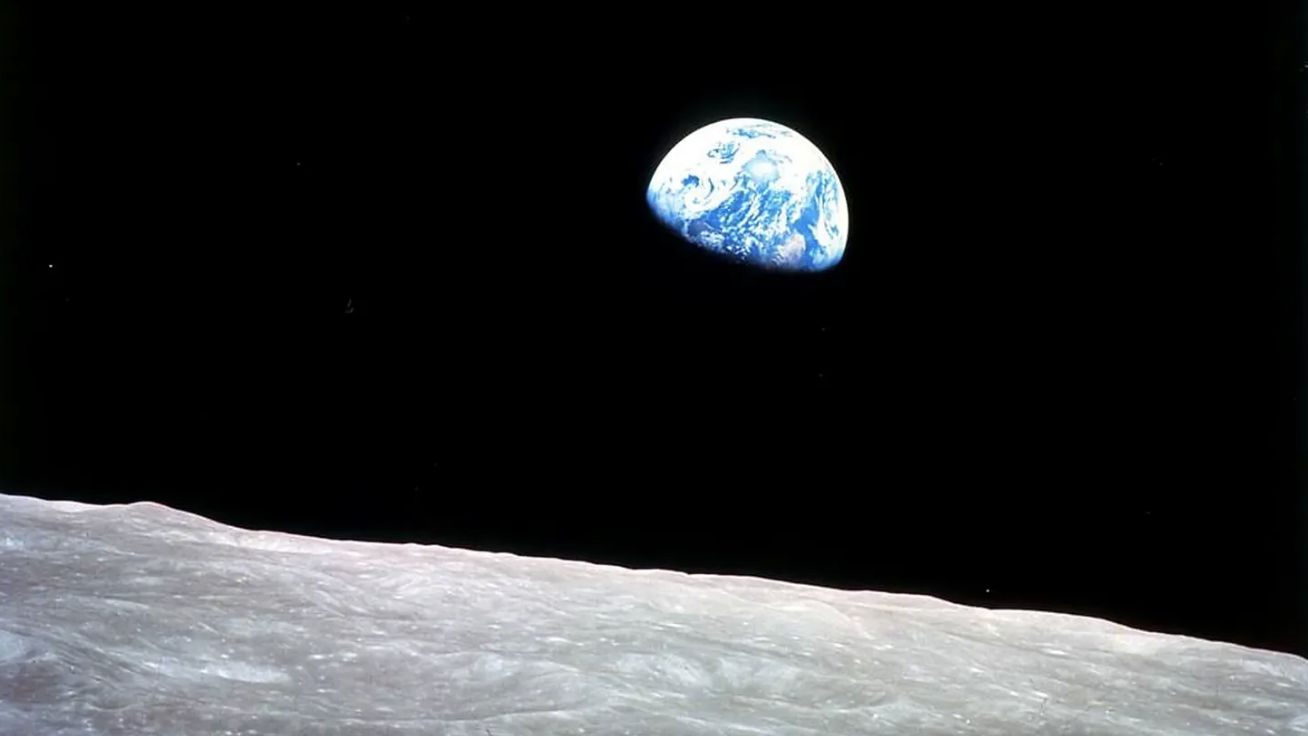
Few images have shifted the frame of human perspective as profoundly as Earthrise. Taken by astronaut William Anders on December 24, 1968, this photograph captures Earth not as a backdrop to the human drama, but as a self-contained, fragile presence floating in the vast, mysterious cosmos.
While other images of Earth had circulated prior to Anders’ photograph, none had been seen through human eyes from space; here was one of our own, blasted into the great unknown, rebroadcasting our home back to us from far beyond its edges. For the first time, the planet was witnessed not simply as “ours,” but as a being in its own right – delicate, finite, and whole.
This sudden confrontation with the foundational-yet-previously-unveiled mirrored the seismic shifts in social consciousness of the era. The late 1960s – marked by political upheaval, cultural revolution, and an increasingly mainstream social/ecological awareness – saw Earthrise emerge as an emblem of an “awakening” humankind. Framed by the Civil Rights and anti-war movements, it fueled the environmental movement that, less than 18 months later, led to the first Earth Day in 1970.
Attention and meaning are deeply entangled, part of the reciprocal dynamics that illuminate our singular (and shared) existence. Earthrise symbolized a tectonic shift of what it is to be human for an entire generation. Widening the scope of our vision meant renegotiating our place as one species among many, interwoven with the rhythms of this earthly abode, with one another, and with the many expressions of life’s unfolding across time and space.