This is Your Brain on Your Brain
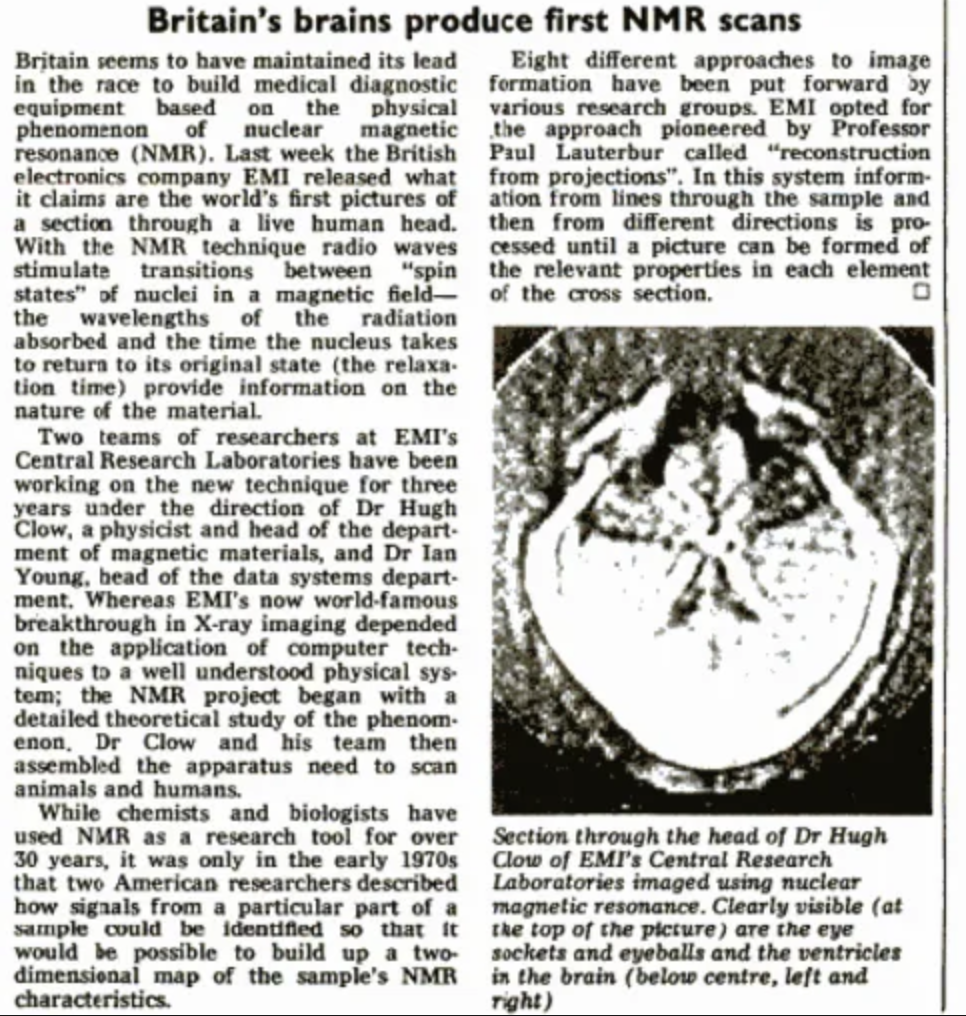
In 1978, researchers at EMI Laboratories captured the first magnetic resonance images of a human brain. These black-and-white snapshots revealed the brain’s intricate architecture by mapping hydrogen atoms in the body’s water through their behavior in a magnetic field – the first time humanity had ever seen itself at the scale of the atom. It was a monumental achievement that advanced the relatively new field of neuroscience. It was also a strange and unprecedented encounter: the brain was seeing itself function. Using the invisible, relational force of the magnetic field as its backdrop, the MRI produced something like a map of human thought, a static snapshot that stood to change the medical field forever.
The MRI measured and made legible the biological correlates of our psychological beingness while providing invaluable insights and life-saving care. In doing so, it brought into direct conversation two ways of thinking about the human brain: the mechanical and the irreducible. Just as a map of the atom cannot account for the unquantifiable characteristics of aliveness – our emotions, our sense of the sacred, the indefinable qualities of the heart, the MRI was never intended to examine more than our neural activity. Yet there it is, happening onscreen: the pulsing colors of a mind in motion. The MRI is an example of how our attempts to quantify human experience always gesture beyond their own technical limitations. What’s possible when we examine these maps with an eye to the mechanistic and the transcendent views of human existence? How might we come to see these two accounts not in contradiction but as mutually constitutive stories of what it means to be us?